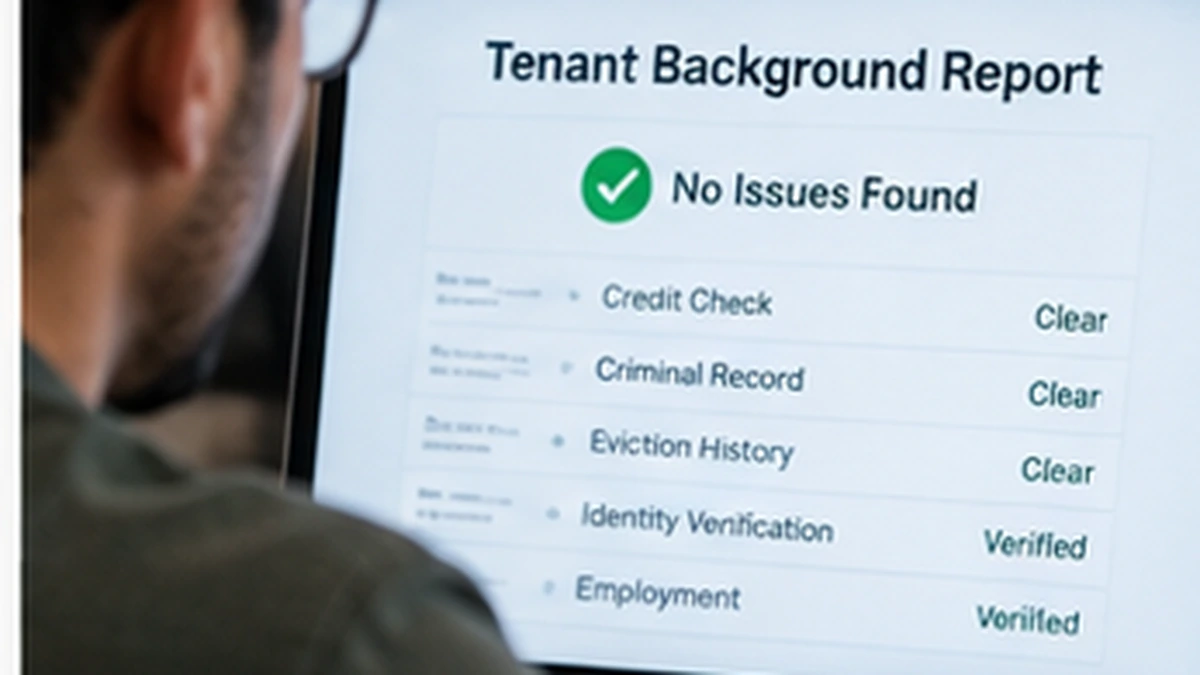
Tenant screening report is easier to manage when a rental decision is treated as a documented process rather than as a quick transaction. Housing searches involve money, identity information, screening, lease terms, property condition, and local law, so careful records can prevent expensive confusion later.
This guide explains tenant screening report in practical terms. Some authoritative sources are U.S.-focused, especially HUD, CFPB, EPA, FTC, and USAGov, so renters elsewhere should use the housing, consumer, or tenancy authority that applies in their jurisdiction.
Tenant screening report can affect whether you are approved
Landlords and property managers often use screening reports when deciding whether to rent to an applicant and sometimes when setting deposits or other terms.
For tenant screening report, apply this point to one real property, application, lease, or rental record. Write the exact address, amount, date, term, or condition involved so the guidance becomes a practical check instead of a general idea. Rental note 1 for tenant-screening-report.
Review identity information first
Check name, date of birth, address history, and other identifiers so another person’s record is not mixed with yours.
For tenant screening report, apply this point to one real property, application, lease, or rental record. Write the exact address, amount, date, term, or condition involved so the guidance becomes a practical check instead of a general idea. Rental note 2 for tenant-screening-report.
Check rental and eviction records carefully
CFPB warns that inaccurate or outdated public-record information can interfere with housing access.
For tenant screening report, apply this point to one real property, application, lease, or rental record. Write the exact address, amount, date, term, or condition involved so the guidance becomes a practical check instead of a general idea. Rental note 3 for tenant-screening-report.
Review credit-related information
Screening can include credit reports or scores, so compare major information with your own credit records if something appears wrong.
For tenant screening report, apply this point to one real property, application, lease, or rental record. Write the exact address, amount, date, term, or condition involved so the guidance becomes a practical check instead of a general idea. Rental note 4 for tenant-screening-report.
Check employment and income verification
Make sure employers, dates, and other verification data are not outdated or connected to another person.
For tenant screening report, apply this point to one real property, application, lease, or rental record. Write the exact address, amount, date, term, or condition involved so the guidance becomes a practical check instead of a general idea. Rental note 5 for tenant-screening-report.
Ask which screening company was used after an adverse action
In the U.S., landlords using a consumer report for a denial or less favorable terms must provide specified information about the reporting company and dispute rights.
For tenant screening report, apply this point to one real property, application, lease, or rental record. Write the exact address, amount, date, term, or condition involved so the guidance becomes a practical check instead of a general idea. Rental note 6 for tenant-screening-report.
Request the report when you are entitled to it
CFPB explains that applicants denied housing based on a report can request a free copy from the screening company within the applicable federal period.
For tenant screening report, apply this point to one real property, application, lease, or rental record. Write the exact address, amount, date, term, or condition involved so the guidance becomes a practical check instead of a general idea. Rental note 7 for tenant-screening-report.
Dispute errors with evidence
Use court records, proof of payment, identification, lease history, or other documents showing why information is wrong.
For tenant screening report, apply this point to one real property, application, lease, or rental record. Write the exact address, amount, date, term, or condition involved so the guidance becomes a practical check instead of a general idea. Rental note 8 for tenant-screening-report.
Keep copies of dispute communications
Save the report, dispute form, supporting documents, confirmation numbers, and responses.
For tenant screening report, apply this point to one real property, application, lease, or rental record. Write the exact address, amount, date, term, or condition involved so the guidance becomes a practical check instead of a general idea. Rental note 9 for tenant-screening-report.
Use local rules outside the United States
The CFPB guidance is U.S.-specific, so renters elsewhere should use the appropriate credit-reporting, privacy, or housing regulator.
For tenant screening report, apply this point to one real property, application, lease, or rental record. Write the exact address, amount, date, term, or condition involved so the guidance becomes a practical check instead of a general idea. Rental note 10 for tenant-screening-report.
A deeper review for tenant screening report
Separate what you can verify today from what still depends on the landlord, screening company, local law, or future inspection. Rental decisions become safer when uncertainty is written down instead of being replaced by assumptions. Deep review for tenant-screening-report.
Also decide which issue would make you stop the process. That could be an unverified landlord, unexplained fee, unsafe condition, missing lease term, inconsistent screening information, or payment request that cannot be verified.
A realistic rental example
A renter finds an attractive property and feels pressure to act quickly. Instead of paying immediately, the renter verifies the address, checks the landlord, reviews written costs, saves the listing, and documents the condition or application process. The final decision may still be competitive, but tenant screening report is based on evidence rather than pressure.
Connect this guide to the rest of the rentals site
Read rental application documents for one related rental topic, and use fair housing rights when the second guide helps you check cost, screening, safety, or documentation.
These internal links connect the first Rentals batch so readers can move from search and application to lease, inspection, budgeting, rights, and move-out without repeating the same article.
A seven-day review plan for tenant screening report
Day 1: collect the relevant listing, lease, application, or record. Day 2: verify the property, landlord, or screening source. Day 3: review costs and deadlines. Day 4: inspect or document condition where relevant. Day 5: check local rules or official guidance. Day 6: resolve unanswered questions in writing. Day 7: decide whether to proceed, negotiate, dispute, or walk away. This rental note is specific to tenant screening report (tenant-screening-report) review 1.
The timeline is only a framework. A simple rental question may take one afternoon, while a screening dispute, discrimination concern, or major lease decision can require professional or legal assistance.
Practical checklist
- Purpose of tenant screening report identified
- Property and landlord information verified
- Costs and required payments written down
- Important documents saved
- Property condition recorded where relevant
- Screening information checked when used
- Local legal or regulatory questions verified
- Stop rule identified before money or sensitive documents are sent
Use the checklist to find the weakest part of your understanding of tenant screening report. One unverified payment request, missing lease clause, or inaccurate screening record can matter more than several details you already understand.
Frequently Asked Questions
Should I pay a deposit before seeing a rental?
Be cautious. Verify the property and landlord first, and use the process described by a legitimate management company or local housing professional.
Are rental laws the same everywhere?
No. Security deposits, notice, landlord entry, screening, rent regulation, eviction, and other rules vary by jurisdiction.
Should I keep rental records after I move?
Yes. Keep the lease, payment records, inspection photos, notices, and correspondence until final issues are resolved, and longer when local law or a dispute requires it.
Where should I verify renter rights?
Use the government, housing, consumer, or tenancy authority for your location. U.S.-specific resources do not replace local rules elsewhere.
Practical review 1 for tenant screening report
Take one real rental record and explain it in plain language: who is involved, what money changes hands, what deadline applies, what condition must be met, and what evidence you would keep. Review 1 for tenant-screening-report.
Then compare the situation with one alternative property, application path, or next step. A rental decision becomes stronger when you can explain why this option is acceptable and what fact would make you choose differently. This rental note is specific to tenant screening report (tenant-screening-report) review 2.
Practical review 2 for tenant screening report
Take one real rental record and explain it in plain language: who is involved, what money changes hands, what deadline applies, what condition must be met, and what evidence you would keep. Review 2 for tenant-screening-report.
Then compare the situation with one alternative property, application path, or next step. A rental decision becomes stronger when you can explain why this option is acceptable and what fact would make you choose differently. This rental note is specific to tenant screening report (tenant-screening-report) review 3.
Practical review 3 for tenant screening report
Take one real rental record and explain it in plain language: who is involved, what money changes hands, what deadline applies, what condition must be met, and what evidence you would keep. Review 3 for tenant-screening-report.
Then compare the situation with one alternative property, application path, or next step. A rental decision becomes stronger when you can explain why this option is acceptable and what fact would make you choose differently. This rental note is specific to tenant screening report (tenant-screening-report) review 4.
Practical review 4 for tenant screening report
Take one real rental record and explain it in plain language: who is involved, what money changes hands, what deadline applies, what condition must be met, and what evidence you would keep. Review 4 for tenant-screening-report.
Then compare the situation with one alternative property, application path, or next step. A rental decision becomes stronger when you can explain why this option is acceptable and what fact would make you choose differently. This rental note is specific to tenant screening report (tenant-screening-report) review 5.
Practical review 5 for tenant screening report
Take one real rental record and explain it in plain language: who is involved, what money changes hands, what deadline applies, what condition must be met, and what evidence you would keep. Review 5 for tenant-screening-report.
Then compare the situation with one alternative property, application path, or next step. A rental decision becomes stronger when you can explain why this option is acceptable and what fact would make you choose differently. This rental note is specific to tenant screening report (tenant-screening-report) review 6.
Practical review 6 for tenant screening report
Take one real rental record and explain it in plain language: who is involved, what money changes hands, what deadline applies, what condition must be met, and what evidence you would keep. Review 6 for tenant-screening-report.
Then compare the situation with one alternative property, application path, or next step. A rental decision becomes stronger when you can explain why this option is acceptable and what fact would make you choose differently. This rental note is specific to tenant screening report (tenant-screening-report) review 7.
Authoritative resource to review
For an authoritative reference related to this topic, review Consumer Financial Protection Bureau – Review Your Rental Background Check. Use the source for the core principle, then verify local rental rules and the exact written agreement before acting.
Final perspective
Tenant screening report becomes easier when the rental process is documented from search to move-out. Verify people and payments, read written terms, photograph condition, protect sensitive information, and keep records.
Leave a Reply